Friday, January 7, 2011

More Florida Flies

I am getting pretty excited about heading to the Sunshine State in April to chase a wide variety of fishes. Cordell was originally concerned about the cold weather snap that South Florida was having, but that seems to have passed and it has warmed up again. Fingers crossed that keeps up! 

Bugs Bunny eat your heart out!
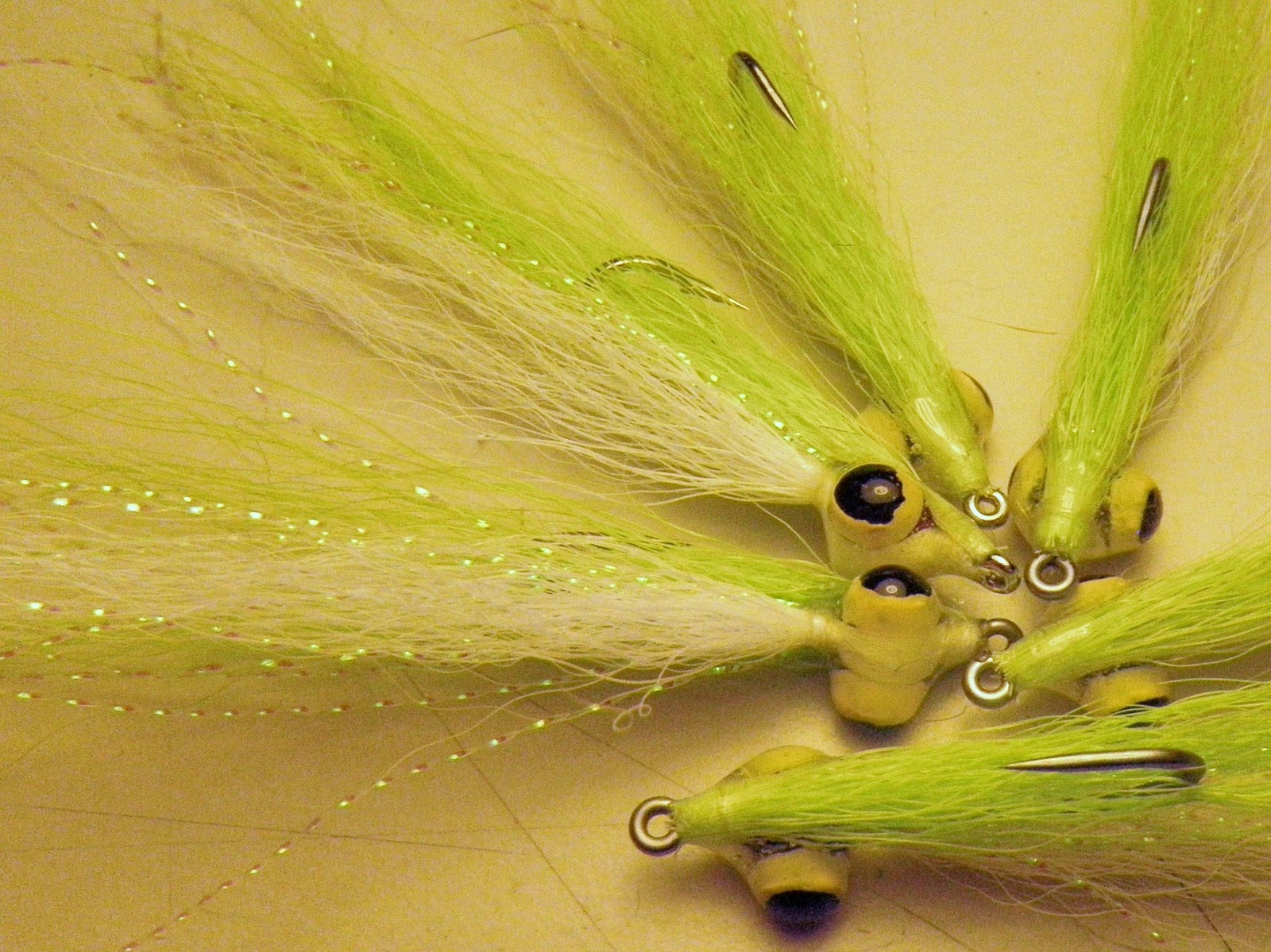
I have been spending most of my time at the tying desk putting together a selection of flies to catch a bunch of flies to catch everything from peacock bass and snook to tarpon and redfish. I am focusing my tying on flies that will catch fish in the mangroves. They need to move some water and can get up into the mangroves without getting caught up too much. Check out these rabbit strip flies.  Should do the trick! 


Ain't no use if it ain't chartreuse!
Great colors for the 'groves.
I have also seen that a lot of EP fiber flies are getting used in the 'Glades these days. I have to admit that I am not much of a fan of the EP fibers but I love Flash and Slinky which can be used in a similar fashion. The Flash and Slinky and other similar materials are a bit thicker and stiffer and I like using them a lot more. Here is my take on that style of baitfish fly.
Mr Mullet!
Scampi anyone?
Shrimp are a favorite prey item of a lot of different fish in the Everglades. Can't head down there without a few shrimpy kind of patterns. I like the "critter" style flies so I did them in two different weights. Should get the redfish and snook's interest don't you think?  The deer hair heads move some water similar to how muddlers do. I suspect that smallies might like this fly in this area as well. Kind of like a sculpin or a darter I would say.


I didn't neglect the canal fish either. Plenty of colors of Clouser Minnows.
 
Canal Candy
 Epoxy minnows should get some attention from those fish too.
I also got some inspiration by looking at the flies of deer hair magician Pat Cohen.  I tied up a few Dahlberg Divers. They should work great for pike and musky too. I added some foam for flotation. I think it will add to the fly quite a bit.

Speaking of musky... I had to do a couple of really big divers to get one of my favorite predator's attention. So I upsized the divers from 2/0 to 5/0. The results are worth it! I am thinking of surface crashes already!


 I am sure there will be a few more flies coming! Stay tuned!

Thursday, January 6, 2011

Tale of the Teeth

Northern on the fly
Back to some science once again!  Aren’t you guys all excited about that?  

I want to talk about the tale of the teeth now. I love to fish for toothy predators. Probably my favorite fish to target on a fly are those with some serious dentition- northern pike, muskellunge, bowfin, and gar all come to mind. What is pretty astonishing though is that many fish we angle for do have teeth whether we know it or not. Bass and trout do indeed have teeth. I will get to that later.

Needle sharp teeth
So what do teeth tell us about a fish and how does that relate to fly fishing?  A great deal really on both ends of that question. Probably the most important thing that dentition tells us is what the fish preys on. I will go back to my old friend the longnose gar. Gar have a single row of tiny needle like teeth on either side of their mouth (which is really just elongated bone). When a gar feeds it makes a slashing strike from the side. Combine the length of the mouth with those needle sharp teeth and you have a great means of grabbing baitfish. A look at other fishes and other animals around the world shows this mechanism to be a fairly common form of eating smaller fish. Houndfish, needlefish, needlenose gar (Xenentodon cancila), Belonesox (the pike livebearer) and others show convergent evolution of this baitfish munching apparatus. I pointed out in an earlier post that gharial and false gharial (both crocodilians) also share a similar mouth structure to allow them to easily grab their prey.

Drum pharyngeal teeth
Crawdad munchin' drum
Let’s look at another fish that has some pretty cool teeth that you probably didn’t even know had teeth- the freshwater drum. This fish’s teeth are found past its mouth. They are called pharyngeal teeth and are located near the fish’s gills. These teeth are nothing like the typical teeth you might think of when you are thinking of fish teeth. They are not sharp. They aren’t for grabbing or slashing or cutting pieces of prey. They are used for crushing. They look like blunt round topped cylinders. When the drum eats a crayfish or a mussel it will bring that food item back to the pharyngeal arch to crush it up. Great adaptation for dealing with crunch food huh? Works really well too. It has helped the drum to adapt to a new prey item in Lake Champlain, the zebra mussel, very quickly. Within the past 15 years the drum in Champlain has used their pharyngeal teeth to great advantage with this nuisance species and the zebra mussel now comprises about two thirds of their diet.

So what do these two examples have to do with tossing feathers?  Well, with the gar I use a wire leader because of their teeth. I probably could get away with using just hard monofilament because the teeth aren’t really cutting teeth, but the wire works well. Do I use a special leader system with the drum? Nope. No need.

Can't see them but there are some teeth below the fly
Wire or hard mono or fluorocarbon does make a huge difference when targeting a lot of different toothy fish. In my book anyone who is not using any of these systems when fishing for pike is a total idiot (I can think of a guide in Vermont who fits in this category quite nicely and you know who you are… idiot). Little do many of us realize that the classic fly rod fish, the brown trout, has some pretty serious teeth. Anyone who has made the mistake of lipping a brown like you might do with a bass has found that out the hard way. I remember those nice parallel lines in my thumb after pulling off that maneuver. Those vomerine teeth are nice and sharp. It is a very effective way of holding onto your prey. Ever caught a smaller trout that has tooth marks on it? I definitely have. Makes you wonder if a pike got into the trout stream sometimes… it probably was one of those big predatory browns that lurks in the hearts and minds of all stream fishermen everywhere. Those of you who don’t target warm water fish are angling for a toothy predator after all. And no wire needed too!

Look at the teeth on that bass-turd!
Ya gots some algae for me?
How about bass? They don’t have teeth do they? Well yes they do. Again, not the classic teeth you think of, but indeed lots of teeth. They are really small teeth and act more like sandpaper. Ever wondered what happened to your thumb after a day of hammering smallies? I bet it looked pretty chewed up. And it was!  If you were to use a magnifying glass to look at the edges of a bass’s mouth on the top and bottom you would find a bunch of little teeth that the fish uses to get a better hold on their prey. Pretty cool. This is not an unusual adaptation for fish to have. Some cichlids in the African rift lakes have taken this to the extreme. They have fleshy lips loaded with teeth similar to the bass, but more on the outside of their mouth. Those teeth are used to rasp algae off rocks. When you are in a very competitive environment like Lake Tanganyika and are a member of a very rapidly reproducing fish family, it won’t take much time for you to evolve into a form that will allow you to utilize an abundant food source like filamentous algae.


How about some of my favorite fish- pike and musky? These guys have teeth baby! Lots of teeth. The muskellunge has over 450 teeth in the upper jaw alone. Check those choppers out! Some serious canine teeth coming up out of the lower jaw don’t you think? What a great way to impale a prey item to keep it in your mouth. Then look at the upper jaw. Most of those teeth are facing backward. This is a very effective way of preventing your prey from getting away. What goes in can’t come out, at least not very easily. Keep this in mind if a pike or musky clamps down on your hand. Try to resist yanking it back out because you will cause yourself a lot more damage.

Pike below, musky on top
Look at those canines!
Are the teeth of these fish the same? Nope. Compare the skulls. The musky has slightly longer/bigger canines. A close look at the smaller teeth in the upper jaw exemplifies another difference. The musky has some bigger teeth at different angles interspersed with those smaller rear facing teeth. Why is this? Well, the musky is a larger predator and will typically target bigger prey items. A big musky will eat things like muskrats, ducks, and turtles with surprising regularity. Those bigger teeth with help this fish handle that kind of victim a bit easier. Yea, pike will eat those too, but generally you will find that the musky is more likely to. Classic apex predator- kill and eat whatever you can fit into your mouth! And that mouth gets big! No wonder muskies occasionally bite swimmers!

Getting to know fish teeth will help you understand your angling quarry a lot better. Knowing the tale of the teeth helps you understand what a fish eats. When you know what a fish eats you will be able to replicate that fish’s prey with an appropriate fly much more effectively. Ultimately it will help you prepare for situations that you may find yourself in while targeting them. That means you should catch more fish. Do your homework! (don’t you feel like you are back in school?)

Wednesday, January 5, 2011

Funny/Strange Photo Contest

As an unofficial kick off to my new fly tying/guiding business, Master Class Angling, I decided that it would be a lot of fun to have a little photo contest for the readers of my blog. I am all about humor in fly fishing. The tweed wearing, trout grass obsessed, uptight upstream only dry fly anglers who lack a funny bone need not apply for this one!

Here is the gig:

Email me the photo (with a story if you want) to muskyflies@gmail.com by February 15, 2011.

Make sure it is a funny or strange picture from a fishing adventure (no your kitty asleep in the garbage can will not make it this time) and that it is appropriate- please no photos with you doing something unnatural with a fish (JP, this could mean you are out!).Think fumbled fish, weird outfits, stupid moves, whatever you got, send it to me!  

Check with a friend to make sure it is really funny. Seriously. I mean it. 

So here are the prizes:

First place: A one day oddball excursion on Lake Champlain for bowfin/carp/gar/drum (and whatever else we find). One on one in the canoe for 8-9 hours of guided fishing. Transportation to VT and lodging not included (sorry guys).

Second place:  18 Pike and Musky flies. From topwater to bottom dredging, this selection will bring in those toothy critters.

Third place: Lake Champlain Oddball Fly Selection. If you want to target longnose gar, bowfin, freshwater drum, carp and suckers, this bunch of two dozen flies will get the job done for you! And they will work beyond Lake Champlain.


I will post all the entries shortly after the deadline (2/15/11) and then a decision will be made. I will make arrangements with the winners for their prizes shortly thereafter.

Looking forward to some good laughs!

Tuesday, January 4, 2011

Flamingo


View Larger Map
I have been offered a fantastic opportunity to head south this April with two of my best fishing buddies- Marty and Tim. I am really excited about spending time with these two brothers and having a chance to fish with Cordell Baum Jr. too... This is going to be a blast! We are going to have shots at so many different fish from bones, reds, tarpon, peacock bass, sharks, snook, jacks.... lots of different opportunities indeed!

Gerry Gruendling with a snook
But I have to admit (a bit selfishly) that I am really looking forward to a couple of days in the backcountry of Flamingo, Florida. Twice in the late '90's I was fortunate enough to spend a week in Flamingo with Gerry Gruendling- one of my professors at SUNY Plattsburgh. We had a great time both times we went. It was the first time I had fished the salt, and despite my lack of experience, we did pretty well. I had equipment that wasn't ideal for the task at hand, but it held up (a reel I still have and use has a lot of corrosion even after 13 years). My flies worked well. And it was a lot of fun.

Our angling competition
If you have not ever been to Flamingo,  (or perhaps have not even heard of it) it is the last outpost on the absolute southern tip of mainland Florida. It is deep in the heart of Everglades National Park. There used to be a small marina store, fish cleaning station, boat launch, park ranger station, restaurant and hotel there. Now it is just a boat launch, ranger station and small marina store thanks to a couple of hurricanes in 2005. A storm surge of 9 feet has a tendency to do that. The boat launch leads to a canal system up into Coot Bay and then ultimately into Whitewater Bay. This is some of the best backcountry fishing available in Florida. There is also a boat launch that puts you onto the flats of Florida Bay which is some of the best redfishing in the Sunshine State. On top of the amazing fishing, the wildlife is stunning. Manatees, dolphins, a huge diversity of bird species, insects (oh, the mosquitos!) and reptiles. South Florida is the only place in the world where you find alligators and crocodiles naturally occurring. And you get to see both of them at the same time there. 

Mud Pond
Both times I went down there we went no motor into the networks of lakes and ponds near Flamingo. Paddling through the mangroves is an experience in itself. The very first morning we were there we took the canoe trail from Coot Bay into Mud Pond. The canoe trail is maybe 8 feet wide or so, really just a creek hacked out of the mangroves. Within a couple of hundred feet, a family of raccoons  ran through the mangroves right over our heads. Quite an introduction. Just looking through the impenetrable growth of the mangrove roots puts you in a completely different frame of mind. And the water color is like nothing else you have ever seen. The no-motor lakes of ENP are great places to fish. Humans (most notably most fishermen), being primarily lazy creatures, rarely venture into these areas. Because of this, there are incredible fishing opportunities for those adventurous anglers willing to head back into these places. Within about 10 minutes of being in Mud, I had my first snook. What an awesome fish. We were spooking redfish and snook like crazy too. I can't wait to put my vastly improved angling skills to work back there this April!

My very first 'poon- the story of this day will come later!
Over those two trips I caught snook, redfish, tarpon, ladyfish, jacks, and Cichlosoma umbriferum  (an exotic introduction, but a blast anyway!). I saw some humungous fish like big boy tarpon, stingrays, and sharks and saw a lot of other fish like sheephead, bonnethead sharks, topfin catfish and black drum. I learned a lot about fishing the back country, what to use, how to do it which I parlayed into some techniques for pike and bass back home. There are a lot of similarities to the two styles of fly fishing. 


First snook ever
I also learned one of the most important lessons I have ever learned about fly fishing- how to tie knots. Gerry and I started fishing Coot Bay. We took the canal and started from eastern shore and worked our way all around the edge of the bay. Gerry really took care of me that day- I fished the entire time without even a follow. We got almost to Tarpon Creek (the way into Whitewater Bay) before I had a take. Now, being a poor college kid I did not have a lot of money to buy good leaders so I had built my own out of mono that I had. Those mono leaders worked pretty well for the most part. I ran into a problem with a knot though. The fish that slammed my bunny fly was a snook. Not just any snook, this puppy was a monster. I think it was easily 40" or better. Yes, it was a freakin' mammoth fish. It inhaled that fly and then I had about 2 seconds of pulling and one of my blood knots gave..... I have tied a whole lot of blood knots since then. I tend to tie them for fun now. I can tie them super fast (clients have been surprised how quickly I hand them back their rigs to fish). And I tie them well. And I test them before fishing them. That was one of the most valuable lessons I ever learned about fly fishing. I took it to heart. As much as it sucked, I would not change that moment for anything. It helped me to become the angler I am now.

Now, thanks to one of my best friends, I am heading back to Flamingo. I am much more prepared for the fishing available. Cordell called the three of us sharpshooters in one of his recent emails and said we should be "deadly".  I tend to agree.

You will be reading a lot more about the preparations. Some flies are done already. I will post up some pictures soon. This is going to be an interesting trip.... 

Wednesday, December 29, 2010

Headin' South

Marty with his personal best musky!
A very good friend of mine is heading south this April. Marty and I have been fishing together for about 10 years now and I probably have to take credit (or blame) for the fly fishing addiction that I started in him. We met through a work situation and quickly became good friends thanks to our mutual passion for death with fins, the freshwater cuda, the water werewolf (it is a bit more than just a water wolf..), yes folks, I am talking about the muskellunge! I was even fortunate enough to have been paddling the canoe when Marty got his personal best musky. We have fished together a lot, but not as much as either of us would like. Marty and I have had some of the best days on the water together (our two best days of musky together were a total of 7 fish landed each day and each of those days had some rapid fire action) and some pretty sketchy days (we got trapped on an island on the rapidly rising Salmon River in March) but we have always had a really great time on the water.

Cordell in his natural habitat

This April Marty is heading down to the Bonefish Bootcamp with Cordell Baum Jr aka the Bonefish Whisperer. If you don't know about Cordell yet, you really need to look him up. This guy is a master of the flats in the Miami area. He fishes out of a canoe for bones, tarpon, reds, permit and even sharks! I guide out of a canoe on Lake Champlain so I have mad admiration for someone willing to take on saltwater bruisers like that. And he has figured out how to catch the exotics and native fishes found in the canal systems around Miami too.  I fully intend on spending some time with him myself as soon as I can. If you are heading to South Florida and want some challenging and exciting fishing you need to hit up the Whisperer! 

I already tied up a bunch of flies for peacock bass to send down to South Florida with the Pikin' Redneck Ken Capsey so I definitely can't send Marty down empty handed. Over the next couple of months I will put up some photos of the flies I am putting together for Marty to nail some fish with. I want to make sure he has the right ammo to take down everything from peacocks to bones to sharks and tarpon..... A lot of fun for him and just as much fun for me to tie that kind of variety! I do have to admit that I feel a bit bad for sending Marty down there with a bunch of my flies since Cordell has some sweet patterns he has developed for the fishing he does but I can't resist the variety of flies it lets me wrap up! So check these out:

 I am loving these epoxy minnows I have come up with. The epoxy minnow is not a new fly by any means but I think my materials and construction method are a bit different than anything else I have seen. I can't wait to see them in action!


Yea, Clouser minnows. I know, big surprise right? There are few places in the world where these flies don't work so I would be remiss in my duties if I didn't send a variety with Marty to go down there. And chartreuse and white is the classic color. Plenty more of these coming in a wide variety of colors and materials too!


Some nice rabbit strip tarpon flies. I saw this pattern in a magazine a couple of years ago. It was rabbit strip in the back and wool in the front. I love the Hareline Sculpin Wool- great stuff to work with and it looks great in the water. It catches fish too! So I tied up these tarpon bunnies on some 3/0 Gamakatsu  Live Bait hooks. It is a stout hook and wickedly sharp. Hopefully that will penetrate the mouth of those brutes fairly easily! The weight of the hook combined with the materials should make for a cool neutrally boyant fly.... Let's see what the field tester says about that!

5/0 Crease flies
I have been having a lot of fun with Crease Flies too. I did them in a couple of different sizes thinking that they could be used for peacocks, snook, reds, small tarpon... lots of things. When I tie them I get to play with epoxy too! I think before too long I will post up how I do epoxy and maybe some instructions for making your own epoxy wheel pretty inexpensively. If anyone is interested that is....

More stuff coming soon!


2/0 Creasers

Friday, December 24, 2010

Merry Fishmas Everyone!

I would like to take the time today to wish everyone a very Mery Christmas! I hope you have the opportunity to spend it with your loved ones. I am also going to wish everyone a fantastic 2011- filled with success in all your endeavors and of course with many, many fish caught! I am going to take a few moments now to put up some photos of people I am very happy to have had in my angling life over the past few years with some words to go along with them. 


Tim, we only got out together for the steelhead trip this past year. I know we tried to fish more, but it didn't come together. That will be a different story this coming summer. I really have a blast out on the water with you. Its time you got a nice carp!


Hey Pete, I could not ask for a better brother! We need to get out fishing more. I know the schedules don't always mesh well, but you do have a score to settle with a certain river... Tossing fluff to Esox is going to happen this year! And lets get you a nice big carp too. (just remember not to set the hook like you would for a bowfin!)


Wesley- you are undoubtedly one of the best young anglers I have had the fortune to fish with! Your postitive attitude, enthusiasm, always growing skill set, and hardcore fishing ethics will take you far with the long rod. We will get out again soon!


Ken it was awesome to get out with you this year finally! Too bad it wasn't earlier in the year though... lots of other critters to get into, but that is what this coming year is for, right?  We have plenty of Esox to tangle with!


Todd, we don't get a lot of opportunities to fish much longer since you are on the left coast, but it is always a great time when we do! I am going to get out there as soon as I can, but we need to do some fishing around Constable again too!


Kurt, we have had a lot of fun every time we have gotten out. Let's make a lot more of that happen in this upcoming season. I am really looking forward to collaborating with you on some work this year too!


Kevin I knew from the first time we fished together that we would put a lot of time on the water! We got out a bunch this year, but is it ever enough? Let's get a picture of you with that musky this year!


Marty, we need to find the time to make trips like this one happen again! Only a couple of days out with you this year was nowhere near enough time on the water with you. That has got to change this season!


Beth,  we don't fish together as much as I would like to but I have to say that without you my fishing would not be possible! Your support and understanding let me do what I do and I cannot thank you enough for that. I am sure we will have a lot of fun on and off the water this coming year. I love you kiddo!

With that, here are wishes for more fishes for everyone reading this blog! Have a very happy and safe holiday season!  And for plenty of tight lines in the coming year!

Thursday, December 23, 2010

Pucker Up!

Hey! Your maxilla is showing!
So class, last time we had Fish Geek Out Class, we were learning about the different types of fishes out there. Of all the categories I talked about, the most modern and most numerous class is the Teleosts. About three quarters of all fish alive today belong to this class. A vast majority of those fishes that we toss feathers and fur at are Teleosts. I hear the cry now: Semper Teleostei! Ok, maybe it should be Pene Semper Teleostei! for me (translation: almost always Teleostei)
The caudal peduncle makes a great hand hold

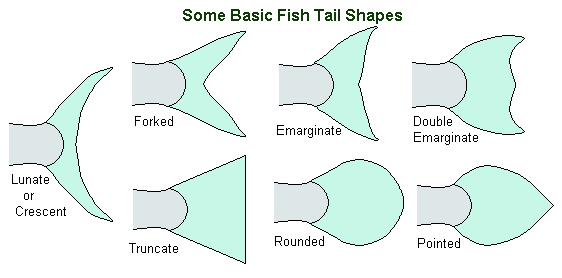
So what makes the Teleosts Teleosts? Well, since they are all in the Actinopterygii they all have rayed fins (those little lines you see radiating out through the fins are rays). They all possess a homocercal tail- one that is equal in size top and bottom. Their spines end in the caudal peduncle- my favorite fish part name!  The caudal peduncle is what attaches the fish to its caudal fin. This is what you grab onto when you tail a fish. I bet a lot of you have used the caudal peduncle and never knew the name of what you grabbed onto until now. Use it with your friends when landing fish for amusing confusion! “Grab the caudal peduncle!”  “The what?”
 
Now, the characteristic of Teleosts that you have all been waiting for- these fish all have movable jaws. The maxilla and premaxilla are able to protrude from the fish. The pucker! There it is! What an amazing ability that we mostly take for granted! I suspect that I need to explain a bit more about this capability.

The maxilla is the upper jaw bone of the fish and the premaxilla are a pair of small bones that usually carry teeth (we all like fish with teeth right?). When these are able to extend it does some cool things. First the jaws extend out- think of it as the fish version of reaching out to touch someone. The mouth also gets a whole lot bigger. Finally, and potentially most importantly, it lets the fish suck in a bunch of water (very technical there huh?). So maybe it isn’t a classic pucker, but this blog entry gave me the idea for the name. Blame them. Great article though…

big bass, cute chic

What does that mean for us fly chuckers?  A whole lot actually if you think about it. I am going to use the smallmouth bass as an example. Look at the fish when it is just sitting there. The mouth doesn’t look too big (hence the name). But what happens when the bass goes to eat something? That mouth opens a lot larger than it appears to. As it opens up water rushes into its oral cavity too. It all happens in a split second. The prey item is washed right in. If you have ever fished bass in relatively clear water this is quite apparent. Your fly is swimming along and then WHOOSH, gone in an instant.

Now, for an instant, think about where you probably hook most bass. I find that much of the time it is in the skin just behind the extendable jaw (the maxilla). Because that maxilla is still attached to the fish when it extends, that flesh behind it is fairly thin right? An easy spot to get a hook into wouldn’t you think? Does that help us anglers out a bit perhaps? Darn tootin!
Kevin's slab rock bass

Here is something else to think about with these extendable jaws. A fish can now eat much larger prey items. Ever caught a small fish on a big fly? Of course you have. Especially bass and other Centrarchids (the sunfish family of which the largemouth and smallmouth are members… I gotta get going with the name game post too…). I have had it happen with a lot of the Esox genus as well. Next time you have a rock bass in your hands, open up its jaws. Don’t worry, be gentle and the fish will be fine. That little guy can open up his mouth pretty far. That is how they get those little poppers so far back in there making it such a pain in the ass to get them out. They open their mouth and suck that popper right in. Just an awesome way to feed!
48" musky- death with fins thanks to that mouth!  


I used to work at a small public aquarium that dealt with fish native to Lake Champlain. We had a pretty small tank, about 10 gallons, and we had a couple of 8 inch pickerel in there. I came in one morning and there was only one pickerel left in there. It was a really fat pickerel too. And he had a tail hanging out of his mouth. That fish was only slightly larger than the other one. The way the jaws open up in members of the Pike family really lets them eat big prey and suck it in. They can, and do eat things that are about 2/3 to ¾ their own length. Obviously they have no issues with being cannibals either. That is why big flies can be a great idea for them too. It is all about that extendable maxilla though… open wide, suck in, and yummy, yummy in the tummy!

I think that it is pretty easy to see what implications that this Teleost adaptation has for this very successful group of fishes. It also seems pretty obvious to me why it really helps out those of us who toss feathers and fur (and flash, and rabbit strips, and hair, and wool and…). It lets these fish grab our flies a whole lot easier and it lets us hook them a whole lot easier too. After catching many bowfin, I can tell you without hesitation that it is much easier to put a hook into the mouth of a bass. And a whole lot easier to get your fingers back intact!

Speaking of that… is anyone interested in learning a bit about dentition?  The Tooth Tale shall be coming up soon!