|
| Yikes! |
#5 Zambezi River, Central Africa. Big fish with gigantic teeth. Hard to hook. Acrobatic fighters. The African Tigerfish. Those teeth can take down small Nile crocodiles (and do). Oh yea, big Nile crocs make this a no wade fishery for sure. Well, not unless you coat yourself in ketchup and mustard before you head in (crocs appreciate condiments). Boga Grips are a must for these fish and it probably goes without saying that wire leaders are in use. 8-9wt rods with shooting heads for 20+ lb fish. The Congo River sports a Goliath Tigerfish that tops out around 100 lbs…. hmmmm… maybe the Congo instead of the Zambezi…. Let’s not forget all the other fish there too- Clarias catfish, barbell, tilapia, Haplochromine cichlids, Cornish Jack, mormyrid fish (literally shocking fish!)… This is an oddball specialist’s African dream indeed!
 |
| Now that is a trout! |
#4 Mongolia- Alright salmonid fans, here you go: Taimen!!! A trout (well technically char) that you use can use musky flies and gear for. Just what I am looking for. This fish is the largest salmonid in the world- the biggest on record was about 230 lbs, but on hook and line it is closer to 100 lbs. Get your Mongol herdsman guide to climb a tree and spot one in the river for you to cast at. As long as he doesn’t throw out a prairie dog on a treble hook with a rope for a line to catch it for dinner…. Of course this is not the only fish in town.
 |
| A pike I would love to catch.... |
The spotted pike (Esox reichertii- the only member of the Esox family not found in North America) can be found in slower waters in the same river systems. Throw in
lenok and
Amur trout (both trout in the genus Brachymystax), grayling and the
asp (a large cyprinid- minnow for you less Latin minded folks), you have a pretty interesting fishery to play around in. Couple that all with a largely roadless area, dangerous terrain, migratory habits of the taimen and the chance encounter with the
Almas (the Mongolian sasquatch) and you have one hell of an adventurous trip ahead of you.
 |
| Tarpon? Carp? nope... mahseer! |
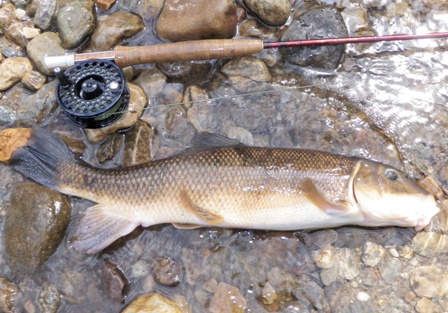
#3 Indian Himalayas. The majesty of the highest mountain chain in the world holds a fish that has fascinated me for years- the mahseer. The steep, fast moving mountain rivers here hold this carp-like cyprinid which can reach up to 100lbs. With
scales like a tarpon,
Fu Manchu mustache,
a trapdoor mouth, a
brilliant gold coloration and a super cool streamer coming off their dorsal fin these are wicked looking fish! Totally tattoo worthy! (if I catch one I will get ink to celebrate it). This is a fish that definitely has the potential to get you down to the last bit of your backing and chasing one down a steep, boulder strewn river is just asking for a broken neck. Sounds like fun to me! Of course, this is not the only fish I want to target here either.
 |
| That's a nice cat! |
 |
| How about that for a set of choppers? |
How about a fish that gets over 6 feet long, 150 pounds, has recurved teeth like a shark, and has possibly consumed people? To make it even more cool, it is a catfish! The Goonch Cat. After seeing
this fish on River Monsters and seeing how it hangs at the tail out of pools (clear water for sight fishing!) I want to get one- really badly. The shot of those fish right at the tail out had me thinking about a 9 wt spey rod with a fast sink tip and a big bunny fly…. Think how awesome that is, a big cat on the fly and one you have to use a wire leader for! BRILLIANT! There are also
snow trout (really a cyprinid) and some brown trout left over from the British Empire days to toy around with. Anyone else for some homemade curry and some bloody big fish?
 |
| Such a classic picture.. |
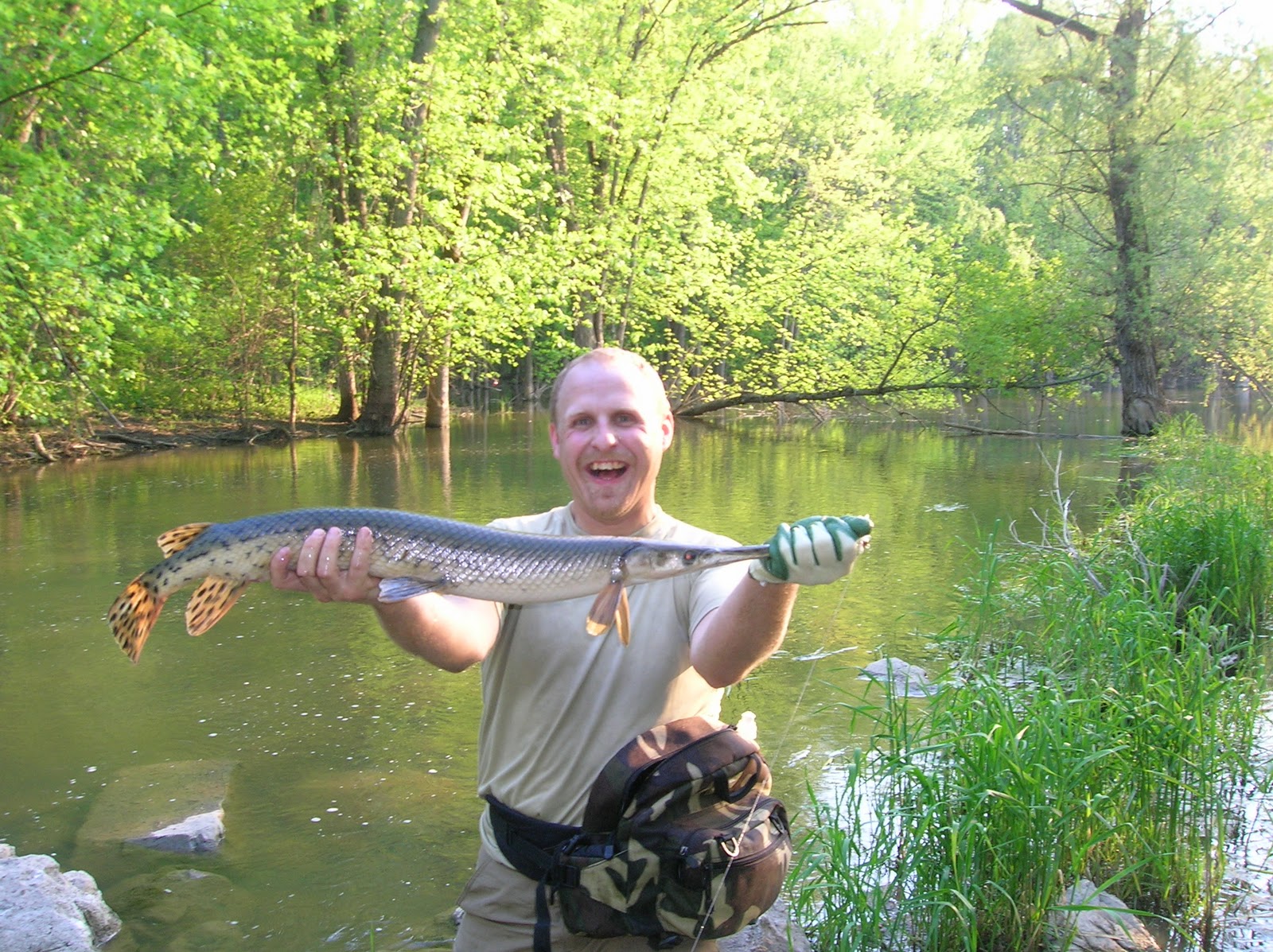
#2 East Texas- As a kid I spent a lot of time looking at this great book my dad had called Fish and Fishing. There was a picture in there of this guy wearing a pith helmet with a steel rod doubled over with a cable for a line dragging this humungous fish up onto the bank and his buddy has it gaffed. My brother and I always wondered just what it was- it looked like it could be an alligator not a fish. Now I know that fish is the alligator gar. This is the fish that I have to say claims my most desired fish to catch spot right now.
 |
| Now that is a lot of fish! Thanks Mustad for the pic! |
This is one of the largest fish in freshwater in North America. They can get up to about 9 feet long, over 200 lbs. They are brutes! Huge scales, huge teeth, tremendously ugly and fight like hell. Custom made for the ol’ DP indeed! East Texas is the place to find this beast. There are still good numbers of ‘gator gar in the Trinity River and other river complexes in the forested eastern part of the Lone Star State. Using some huge streamers on 10 to 12 wt rods with heavy tippet and a wire leader might bring one of these behemoths to the boat. Get it in the boat and watch out- its thrashing could break your leg like a toothpick. Like the other locations this is not the only fish to be caught- longnose gar, bass, drum and others are also available and it is all in the heart of
Texas sasquatch territory (seriously). I certainly would not hesitate to cast at one of the big longnose gar- the current world record of 50lb 5 oz came from the Trinity in the 50’s. Things ARE bigger in Texas….
And now, for the final, most thrilling dream location for me:
 |
| Major league watershed! |
 |
| Gorgeous male peacock with a small nuchal hump |
#1 The Amazon. The center of freshwater fish diversity in the world. 3000 fish species described so far and it is estimated that there could be another 3000 left to discover. One of the biggest draws for anglers here is the peacock bass. This is a diverse group of fish in the genus
Cichla- some of the largest cichlids in the world. Beautiful colors, crazy rod breaking fights, and the males sport a weird nuchal hump on their heads during the spawn. These things are so gorgeous that I might even mimic Jimmy Houston and give one a kiss. Then there is the
arowana- the monkey fish- a popular aquarium fish that readily jumps out of the water for insects or other meals. And its larger cousin the
arapaima- one of the largest primary division freshwater fish in the world (that means it lives exclusively in freshwater). This is a true giant capable of reaching lengths of over 10 feet and 400 lbs. Also called the pirarucu, it surfaces to breathe air from time to time. They will take flies.
 |
| Arapaima- an average fish! |
So will some of the
large catfish there. When I say large, I mean 4-8 foot fish. Yea, f-ing big. Don’t know if the
electric eel will take a fly, but I am willing to give it a try as long as I have a
native guide to gaff it just like Larry Dahlberg did. So many other fish to catch too:
multiple species of piranha,
cichlids of all shapes and sizes, lots of different
cyprinids, smaller catfishes, and on and on. A few other fish that are possible are freshwater drum (different than the North American version),
pacu, freshwater stingrays,
pike characins, and the
toothy traíra. I almost forgot the
payara- the vampire fish. This thing sports huge lower canines that fit into sheaths in their upper mouth. Getting up to 30 lbs, in fast water and fighting hard, they are a fish made for me! With all these fish to fish for it seems like I might have to spend at least a month there… two would be better.
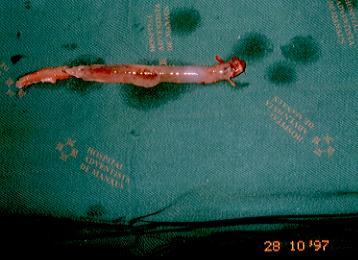
There is one fish I don’t want to encounter though…. The candiru. This tiny little catfish will follow a urine stream put to its source- definitely not a good thing for a wading angler! Perhaps the sheath that I got from the New Guinea natives would help out……
 |
| Guess where this came from? |
So that is my list of my top 10 destinations worldwide for freshwater fly fishing. If I ever hit the lottery I will be visiting them all. There are a few that are easily within reach- Minnesota and Texas-and I hope it won’t be too long before I get to them. This is by no means a comprehensive list either… there are plenty of other places I would love to fish- Central America for a variety of cichlids found there, the Orinoco Basin in South America (very similar to the Amazon but with a large endemic crocodile!), the Nile River for Nile Perch, Austria for Hucho hucho and wild browns, Wels catfish somewhere in Europe, Lakes Malawi and Tanganyika in East Africa for the diversity of cichlids there, on and on and on. Basically anywhere there are fish I will fish for them.